The turmoil in Papua (Freeport) has not just happened for this time but along its 44 years of mining activities. PT Freeport Indonesia in Papua has incised a bad record internationally for Indonesia in respect with human rights, environmental destruction, local communities’ poverty, robbery of the traditional rights, violence and repeated murder of Papuans around Freeport -- all of which become national and even international communities concern.
However, the government has no administrative, systematic and holistic solution to address these protracted issues. If we have to be honest, the real root causing this chaos is about the Freeport's Contract of Work itself, the state's fragile mining policy as well as the corrupt administration system.
Contract of Work sided whom?
On April 5, 1967, the Indonesian government and Freeport Sulphur Company, through its subsidiary PT Freeport Indonesia Incorporated (Freeport) signed the First Contract of Work (CoW) which not only became the first generation of CoW signing in Indonesia but also the basis for the preparation of the Mining Act No. 11 year 1967 which was enacted in December 1967 or eight months after the signing of CoW.
So far, PT Freeport Indonesia has conducted two explorations in Papua, first in Hertzberg mine (1967 to 1988) and second in Grasberg mine (1988-present), both in Tembagapura, Mimika District. The exploration land which the government handed over to Freeport covers an area of 10,908 hectares for 30 years long contract, commencing from the first carried out commercial activity. In December 1972, Freeport shipped 10,000 tons of copper from the Hertzberg mine for the first time to Japan.
The First CoW contains many fundamental flaws and is very detrimental to the Indonesian side. In mining operations, the government of Indonesia does not have the proportional benefit to the enormous economic potential in the mining area. Due to the lack of provision on the environment at the time, the company had to dispose of tailings to Ajkwa River since the beginning causing environmental damage.
Taxation arrangement did not correspond with the settings in the Tax law that applicable for example, Freeport is not obliged to pay the Land and Building Tax or VAT. There is no obligation for Freeport to do community development. Consequently, the existence of Freeport in Irian Jaya has no direct positive impact on local communities.
Freeport also obtains fiscal space, among others; tax holidays during the first 3 years after starting production. For the next year for 7 years, Freeport is only taxed at 35 percent. After that, the taxes imposed increased to approximately 41.75 percent.
We do not have accurate data on the amount of production from the Hertzberg mine. In planning and the initial agreement, it seems agreed that this mine will only produce copper (tembaga), and this becomes the basis why the initial location of mining is called Tembagapura. Besides copper, the Hertzberg mine also produces gold. Gold, which was originally assessed only by-product, it later became the main product of Freeport. This is supposedly due to the higher concentrations of gold and silver in minerals and deposit that was found.
We're not too sure about claims of gold is a by-product, because at that time no Indonesian follows the purification process of concentrates. Moreover, in the early period of mining, refining concentrates were done abroad, either in Japan or in America. In addition, Freeport had not yet become a public company that must follow the principle of good corporate governance. Thus, it could be true that since the beginning Freeport has produced gold and even silver, but not declared, or intentionally hidden from the government.
In 1995, Freeport officially recognized the gold mining in Papua, having previously (1973 to 1994) claimed only as a copper miner. The total volume of gold mined during the 21 years was never known publicly, even by the Papuans themselves.
Freeport continued to achieve huge profits, until the first CoW was extended to second CoW that was not renegotiated optimally. Indonesia did not have the benefit comparable to the huge profits achieved by Freeport. The provision of fiscal and financial subjected to Freeport was much lower when compared with the prevailing countries of Asia and Latin America.
The extension of second Contract of Work should have provided greater benefits because Freeport had discovered the huge potential of new reserves at Grasberg. The contract was extended in 1991, when the first Contract of Work only ended in 1997. The second CoW has not been improved much to provide additional financial benefits that are meaningful to the Indonesian side. The changes occured only in terms of shareholding and in terms of taxation. Meanwhile, the amount of royalties did not change at all, despite the change in the amount of gold reserves. Grasberg gold has been the largest gold reserves in the world ever discovered.
In the second Contract of Work on the provisions regarding royalties or exploitation/production fees (Article 13), it explains that the royalty system in Freeport's contract is not based on percentage of gross sales revenue, but from percentage of net sales. Net sales are gross sales after subtracting the cost of smelting, the cost of refining, and other Freeport expenses incurred in the sale of concentrate. Percentage of royalties based on the percentage of net sales revenue is also classified as very small, ie 1 percent-3.5 percent depending on the price of copper concentrate, and one percent flat fixed for precious metals (gold and silver).
On the Freeport contract, the amount of fixed fees paid to the mining area ranged between U.S.$0.025 to 0.05 per hectare per year for the activities of the General Survey, U.S.$0.1 to 0.35 per hectare per year for activities of Feasibility Study and Construction, and U.S.$1.5 to 3 per hectare per year for operating activities of exploitation/production. These contribution rates, in all phases of activities are very small, even very difficult to accept with common sense. With the exchange rate of U.S.$1 equals Rp9,000 then the amount of contribution is only Rp225 to Rp27,000 per hectare per year.
Meanwhile, regarding the supervision of the mineral content generated, none of the Freeport contract explicitly mentions that the entire operation and smelting and refining facilities must be fully carried out in Indonesia and in the supervision of the Government of Indonesia. Article 10, point 4 and point 5 regulates the operation and smelting and refining facilities that are implicitly emphasized the need to be done in the territory of Indonesia, but does not express explicitly that it should be entirely (100%) to be done or be in Indonesia. Up to now, only 29 percent of concentrate production has been purified and processed in the country. The remainder (71 percent) are sent abroad, outside the direct supervision of the Indonesian government.
In the Freeport Contract, not a single article explicitly set the premises that the Government of Indonesia may at any time terminate the Freeport Contract. Also even if Freeport has been rated of making offenses or do not fulfill their obligations under the contract, still Freeport may at any time terminate the contract when they assess a mining business in the territory of its mining contract is no longer profitable economically. In the second CoW, Freeport mining area currently covers an area of 2.6 million hectares or equal to 6.2 percent of the area of Irian Jaya, if compared with the initial operation where Freeport is just getting concession area covering 10,908 hectares. Actually Indonesia can get a proportional benefit from its own mine. This can be achieved if CoW that has been signed, among others, contains provisions for a fair, transparent, and impartial state and community interests. Apparently the government in the past, until now, is not able to make optimum benefit.
Others may enjoy
In 1981 Freeport Minerals, Inc has merged with McMoRan Oil and Gas, Inc and formed the Freeport Minerals, Inc with its main asset the huge potential of copper, gold and silver stored in Mount Hertzberg. In 1987 Freeport McMoran formed a subsidiary called Freeport McMoran Copper Company, Inc by selling 85.4 percent of its shares to PT Freeport Indonesia Inc. In 1988 after the discovery of Grasberg, the third largest copper deposits and largest gold mine in the world, Freeport McMoran Copper Company, Inc. (FCX) registered with the New York Stock Exchange (NYSE).
At that time, Freeport sold 5 million shares (23.4 percent) through an Initial Public Offering (IPO) and gained U.S.$3.31 billion. Then in January 1991, the subsidiary changed its name to Freeport McMoran Copper & Gold Company, Inc.
The people of Indonesia should be aware of the lessons and the folly of the sale of these shares. Natural resources belonging to the state and people of Indonesia have been sold and mortgaged by Freeport to investors in capital markets abroad. From the results of the sale, Freeport raises capitals and increases firm value that is very large. AS the nation of Indonesia does not have a significant stake and so it does not automatically participate in managing of the company, it cannot enjoy the rise of capital gains and value. The people of Indonesia are just spectators of pleasures obtained by foreigners and colonialists.
The fragile mining policy applied by the government reappears in the fifth CoW of Freeport. Despite the government's bargaining position in the fifth CoW that has little benefit, but it is regarded as fair for Indonesia as the owner of natural resources of mineral mines that are managed by Freepot.
A shift of the second CoW to fifth CoW obliged Freeport to transfer shares to Indonesia's national side, providing the transfer of up to 51 percent of shares to companies/individuals nationwide in 20 years. The Indonesian government had previously received 8.5 percent of the shares of Freeport in 1976 and to 10 percent until 1998. The fifth CoW also determines, five years after the signing of the contract, 20 percent of Freeport shares must be owned by the Indonesian nationals. Terms of divestment of shares to the government in general applies to all companies that signed the fifth generation of CoW. However, at that time, most companies that signed the fifth generation of CoW are still in the stage of general exploration, unlike Freeport that has been in production phase.
The Freeport shares to be transferred within the first 5 years was 10 percent because in the past five years after the signing of CoW the company had plans to invest heavily in Grasberg. It specifically hoped that divestiture of provisions in the fifth generation of CoW could be commuted. Freeport was successful. The government then issued Government Regulation (GR) No.20 year 1994 that permited foreign investment in full (100 percent). The GR was issued in 1994, while the fifth CoW with the Freeport was signed in December 1991, or three years before the GR No.20 year 1994 issued. With this GR No.20 year 1994, the government opportunity to join a majority stake in Freeport has lost.
Furthermore, we noted how the government acted deliberately harming the state by not taking advantage of the opportunity to buy 10 percent stake, which was a continuation of the divestment program of 20 percent stake in Freeport. The Government gave the opportunity to the Bakrie Group. At that time, the Minister of Finance has just approved an increase of Indonesia share ownership from 9 percent to 10 percent. The Finance Minister deliberately did not want the government shares more than 10 percent. Because of that, then Freeport has to sell their shares to the Bakrie Group. The problem of shares purchasing by the Bakrie Brothers has been under scrutiny from various quarters, including from the Attorney General.
Papua impoverishment, the government seemed 'blind'
Poverty, on the other hand, continues to occur in parts of Mimika. The welfare of Papuans does not automatically winches up with Freeport's presence in the region they live. In the area of Freeport's operations, the majority of indigenous people are under poverty line and are forced to live by scavenging gold remainings in Freeport waste. Adding to the problems of economic inequality, Freeport's mining activities also damages the environment and leading to massive human rights violations. Timika even becomes home of deadly disease like HIV/AIDS and scores the highest number of people living with HIV/AIDS in Papua. The existence of Freeport has also left human rights violations issues associated with the actions of the Indonesian security forces in the past and present which meet the government negligence. Until now, none of the serious human rights violations are followed up by the government even the government seemed 'blind'.
The failure of development in Papua can be seen by the poor rate of human welfare in the District of Mimika. Residents of Mimika District, where Freeport is located, consist of 35 percent indigenous and 65 percent migrants. Almost all of the entire poor population of Papua is Papuans, with revenues of the local government of thus far depends on the mining sector. From the year of 1975-2002 as much as 50 percent more of Papua Gross Domestic Product was derived from tax payments, royalties and profit sharing of non-renewable natural resources, including oil and gas companies. This means that the dependency on the extractive sector revenue will create chronic dependency and vulnerability for the future of Papua regions.
In 2005 it can be seen that Gross Domestic Product (GDP) of Papua ranked third of 30 provinces in Indonesia. However, Human Development Index (HDI) of Papua, which is expressed with a high mortality rate of pregnant women and young children due to malnutrition problems, was at 29th. Even worse, pockets of poverty are located in the Freeport mining concession.
Government's lost conscience
Freeport has benefited from the abundant of mineral resources in Papua. These advantages have propelled Freeport from a landless and unknown company into a giant mining company in the world only in a short time. However, the change becoming a giant company should be presumably obtained by any fraud, manipulation, corruption, political pressure and far from commendable and civilized rules of business and state relationships patterns. Facing such conditions, the Indonesian government should be more confident in using a high bargaining power to get the optimum exploitation of resources. Indonesian is the owner of the property not 'they' who come here to earn a fortune!
The government which has lost its conscience should now be willing to take decisive measures against Freeport that clearly violated the law. While the legal basis for it is available such as laws on environment, forestry and taxation, it is the government goodwill that can stop this act of Freeport. The first step is by conducting an environmental and financial audit of Freeport.
The government should not let this injustice prevails. Therefore, the next step is that the government should be confident to review and correct the policies and content of Freeport's CoW. The CoW with Freeport should be modified in accordance with the mandate of Law Number 4 Year 2009 on Mineral and Coal Mining. This law ordered that all CoW operating in Indonesia before the Act was published, should be adjusted. Specifically, Article 169 item b in the transitional chapter has mandated that the content of the Contract of Work, with the exception of Freeport's Contract of Work, to be adapted to the contents of the Act no later than one year since the Act was passed. And this is the command of Act. Therefore, the government should be confident to change the contents of Freeport's CoW. The government that does not execute the command of the Act is not feasible to be maintained. (*)
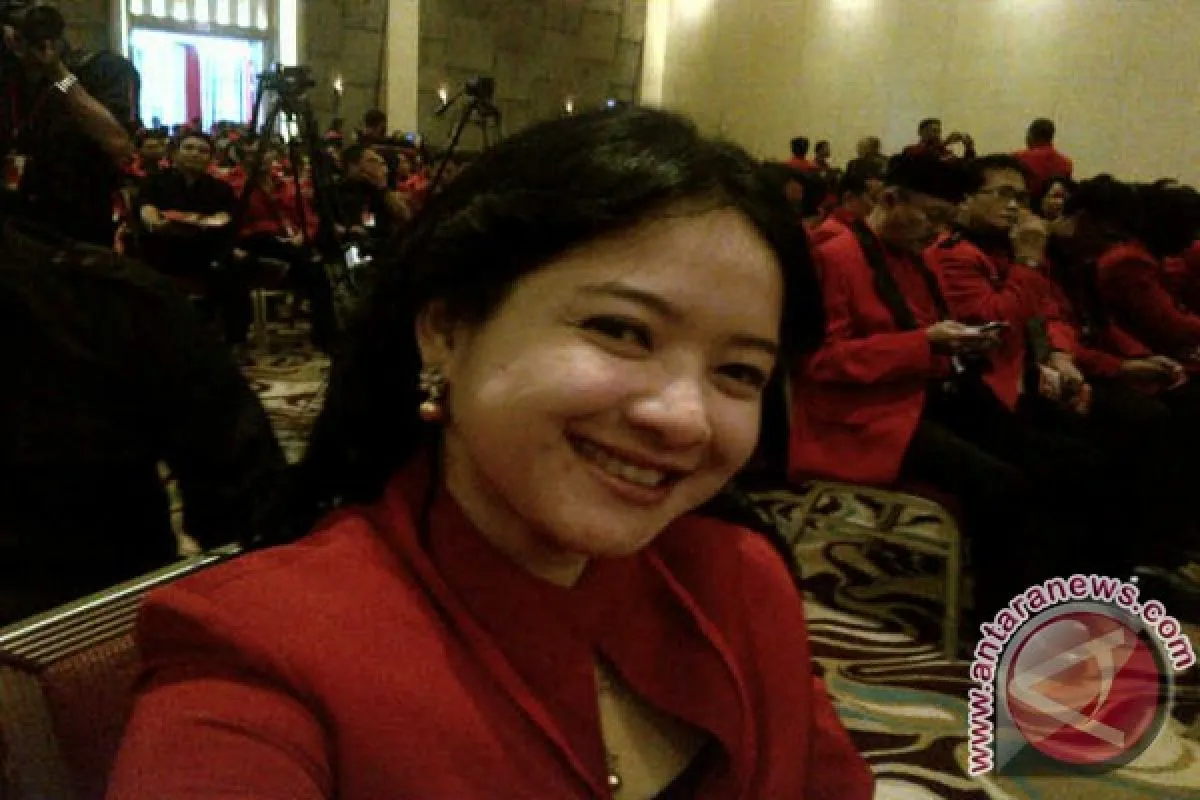
*Member of Parliament of Commission VII from PDI Perjuangan
Editor: Kunto Wibisono
Copyright © ANTARA 2011


